The Kennedy Forum joined health care leaders, payors, providers, medical groups, and mental health advocates in Washington, D.C., as the U.S. Department of Health and Human Services (HHS) hosted a kickoff event and pledge-signing ceremony focused on transforming behavioral health care in America.
The event brought together leaders around a shared commitment: expanding access to high-quality mental health and addiction treatment with models that work, emphasizing quality, parity, and early intervention to create clearer clinical pathways that seamlessly connect people from screening and diagnosis to evidence-based treatment, recovery, and long-term support.
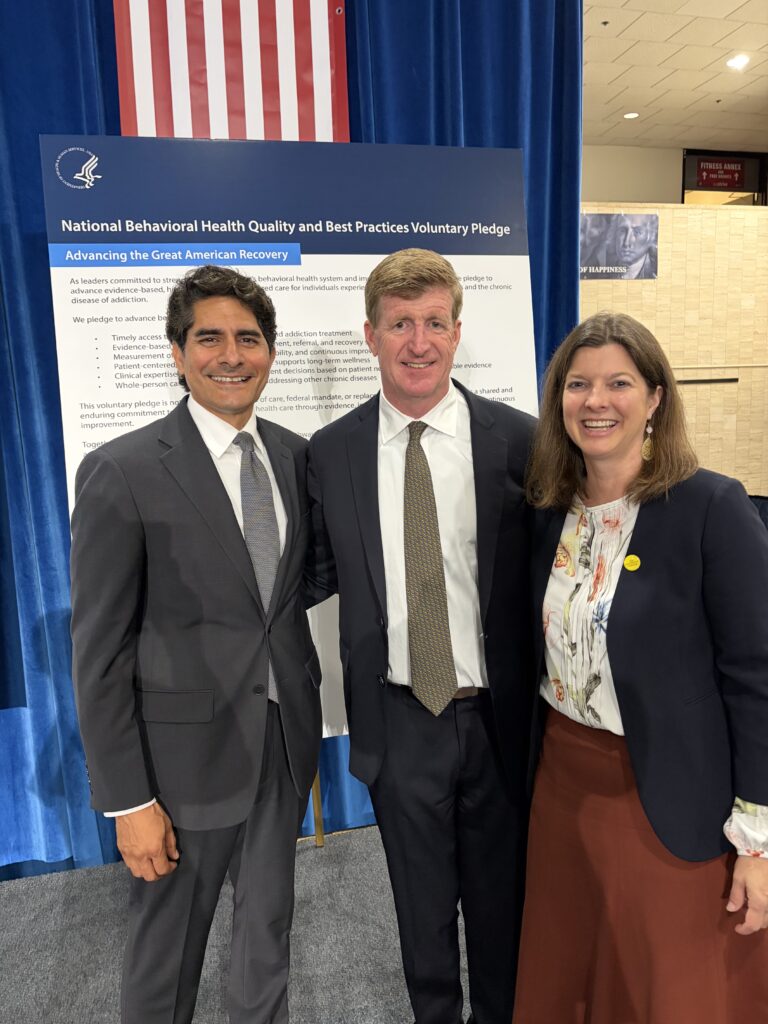
During a roundtable discussion, HHS Secretary Robert F. Kennedy, Jr. outlined the department’s goals for a behavioral health system centered on timely access, individualized treatment, and care that is evidence-based and patient-focused. The conversation reflected many of the principles The Kennedy Forum has long championed, including the need for measurable quality improvement, stronger care integration, payment models that support better outcomes, early intervention, and the need for parity between mental health and physical health.
Dr. Patrick Conway, Chief Executive Officer of Optum at UnitedHealth Group, emphasized that behavioral health must adopt the same focus on outcomes that has improved care in other areas of medicine. “In the cancer arena we put that into place decades ago and we’ve seen the improved outcomes. We have to do that in mental and behavioral health, to deliver whole-person care that delivers high-quality, evidence-based care to all Americans,” Conway said.
VIDEO CAPTION: Dr. Conway notes how today’s issues build his time at CMS, including collaboration with The Kennedy Forum and other partners to advance payer quality initiatives and the Collaborative Care Model, a CMMI-supported approach that integrates behavioral and physical health care.
Dr. Oz further highlighted why models like these are critical to the nation’s physical health, drawing from his experience as a surgeon. “If you don’t deal with the psychiatric and emotional issues that your patients face, you can’t do any of the things we do — frankly, I don’t think any doctor can practice,” he said.
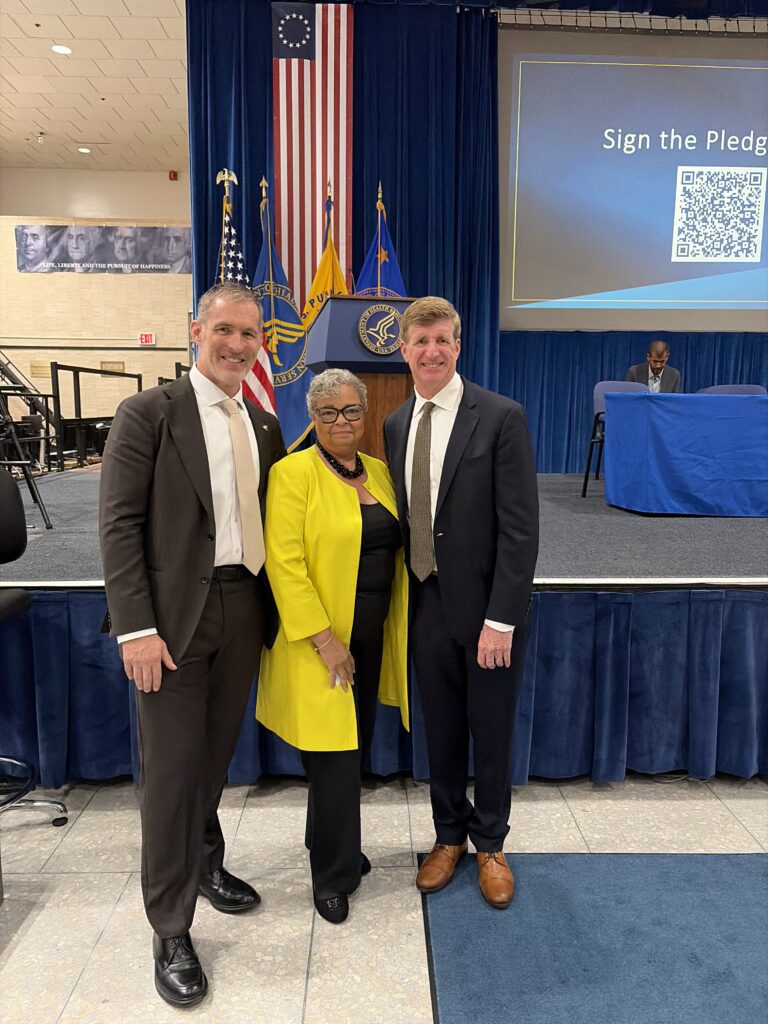
Referencing conversations with The Kennedy Forum co-founder Patrick J. Kennedy, Dr. Oz emphasized that these innovations will only reach their full potential if they are grounded in something more fundamental: rebuilding connection, trust, and relationships across American society. “In your time of need, you should be with community,” he said.
The key, according to many speakers, is to treat mental health as an urgent public health issue. “We can no longer simply treat people after they’re in crisis. We have to get upstream,” said Dr. Arthur Evans, CEO of the American Psychological Association. “Most people agree that we ought to be taking more of a population behavioral health approach.”
Building clinical pathways can reliably move people from screening to evidence-based treatment and recovery — a vision reflected in The Kennedy Forum’s 90-90-90 goals: 90% of people are screened for mental health and substance use conditions, 90% of those who screen positive receive evidence-based treatment, and 90% of those in treatment are supported toward recovery.
VIDEO CAPTION: Dr. Kyu Rhee, President and CEO of the National Association of Community Health Centers, highlighted the 90-90-90 framework as a model for aligning policy and practice around measurable improvements in care.
The Kennedy Forum leadership joined other health care leaders in pledging to support these efforts and looks forward to continuing its work alongside partners to improve access, quality, and outcomes for people with mental health and substance use conditions.
“The Kennedy Forum has long understood the importance of aligning leaders around systemic transformation,” said Rebecca Bagley, President and CEO of The Kennedy Forum. “This marks an exciting point of acceleration that aligns the health care system and the leaders who shape it every day around a shared commitment to better outcomes — bringing us closer to achieving 90-90-90 by 2033.”
“Every major advancement in mental health care has been driven by people who refused to accept the status quo,” said Patrick J. Kennedy, Co-Founder of The Kennedy Forum. “The commitment demonstrated today shows what is possible when we bring together policymakers, providers, payors, and advocates who believe that there are better paths forward. There is more work ahead, but I am encouraged by the momentum and the shared determination to create a behavioral health system that delivers for every American.”

